
English| EUR
Suggested for you
More currencies
Choose a language
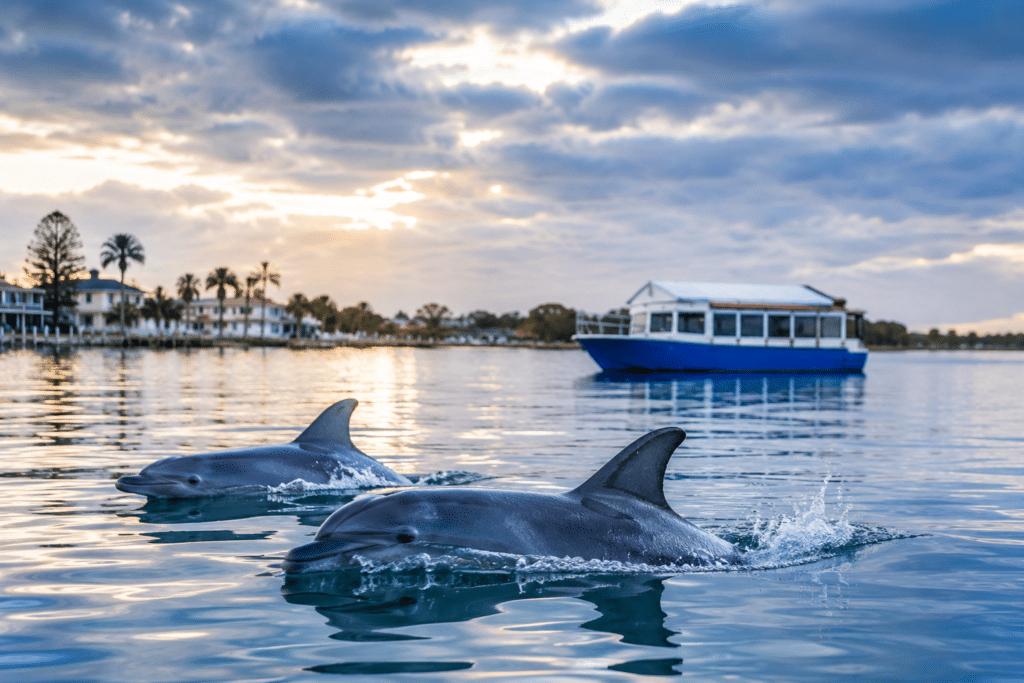
The Peel-Harvey Estuary shelters one of Australia's largest populations of Indo-Pacific bottlenose dolphins—more than 120 individuals tracked by researchers. Timing a cruise around their feeding patterns, tidal movement, and weather windows determines whether you drift past empty channels or watch pods surface within arm's reach.
Quick answer
The mandurah dolphin cruise best time is early morning, between 9:00 and 11:00, when dolphins are most active during feeding and tidal exchange. Year-round sightings are reliable, but spring and autumn deliver the calmest conditions and highest visibility. Winter mornings can be windy, while summer afternoons bring glare that obscures surface movement—departures before midday consistently outperform later slots.
Mandurah's estuary system holds a resident dolphin population that does not migrate, which means sightings occur across all twelve months without the seasonal drop-offs common to offshore whale-watching routes. Researchers have documented consistent pod activity near the serpentine waterways threading through mangrove-lined channels, tidal flats, and the marina precinct. The animals feed on mullet, whiting, and blue swimmer crabs, concentrations of which shift with the tide cycle rather than the calendar. That tidal rhythm, combined with wind and light conditions, shapes the practical window for spotting dolphins at close range. Morning departures align with the incoming tide, when dolphins follow prey into the shallow estuary arms and surface frequently in confined waterways. Calm morning waters allow the crew to cut the engines and drift silently, letting pods approach the hull. By contrast, afternoon sea breezes roughen the surface, making it harder to distinguish dorsal fins from wind chop. Glare off westward-facing channels also reduces visibility after midday. While dolphins remain active throughout the day, the combination of flat water, soft light, and predictable feeding zones gives early slots the clearest advantage. Seasonal variations affect comfort more than sighting probability. Spring months from September through November bring mild temperatures, minimal wind, and wildflowers along the shoreline reserves visible from the water. Autumn—March to May—offers similar conditions with warmer water temperatures. Summer cruises run under full sun, requiring sunscreen and hats, but afternoon heat haze can obscure distant movement. Winter mornings are crisp and clear, though southerly winds occasionally prompt route adjustments to more sheltered channels. Operators maintain daily departures regardless of season, and the resident population ensures encounters year-round. Booking the earliest available departure improves outcomes measurably. Operators schedule trips at intervals throughout the day, but the 9:00 departure window captures peak morning feeding activity before boat traffic increases and before wind builds. Weekend mornings see higher passenger numbers, so midweek departures in the early slot offer quieter conditions and more flexible positioning when a pod is sighted. The mandurah dolphin cruise best time guide comes down to timing within the day rather than selecting a narrow date range—the estuary's sheltered geography and resident pods remove the seasonal lottery that governs open-ocean wildlife excursions, leaving weather, tide, and light as the variables within your control.
“Mandurah's resident dolphin population means sightings occur across all twelve months without the seasonal drop-offs common to offshore whale-watching routes.”
The booking office and facilities for your Mandurah dolphin cruise operate daily throughout the week to assist with your visit planning.
The Mandurah Cruises Jetty is located at Mandjar Square, Mandurah WA 6210, Australia. It is centrally positioned along the Mandurah waterfront, making it easily accessible by road or public transport.
Mandurah Line to Mandurah Station, then 951 bus to Mandjar Square
Kwinana Freeway (State Route 2) southbound to Mandurah Road
Walk from Mandurah Station or nearby waterfront parking areas
Public parking is available near Mandjar Square, but allow extra time during peak periods to locate a space. If arriving by train, the local bus service provides a direct connection to the jetty area.
A few steps will help you make the most of your dolphin cruise and ensure smooth boarding.
Everything you need to know about mandurah dolphin cruise best time
The mandurah dolphin cruise best time is generally between 09:00 and 16:00. These hours provide calm waters and ideal sunshine for observing the local wild dolphins in their natural habitat.
Morning hours are often preferred because the estuary waters tend to be calmer, which assists in visibility. Wildlife is frequently active during these periods, making it a reliable choice for visitors.
While the mandurah dolphin cruise best time remains consistent throughout the year due to weather, seasonal variations in water temperature can influence dolphin movement patterns. We recommend checking availability for your specific travel dates to ensure you secure a spot.
Yes, you are free to book outside of the peak mandurah dolphin cruise best time window, though marine conditions can vary. All cruise schedules are subject to availability and weather conditions at the time of your visit.
Families often find that the designated mandurah dolphin cruise best time is perfect for children as the shorter boat trips and calm waters provide a comfortable experience. The cruise offers an engaging way for guests of all ages to learn about Mandurah waterways.
During your visit, it is helpful to bring a camera for wildlife photography and sun protection. Please ensure you arrive at the Mandurah Cruises Jetty on time for your scheduled departure.